

Biohacking Your Resilience: Stress Management for Real Estate Agents in 2026
Biohacking Your Resilience: Navigating Economic Headwinds with Brain Health Strategies
As a Certified Amen Clinics Brain Health Coach and a Certified Tom Ferry Coach, with deep roots in research, biohacking, and decades in the mortgage and real estate industry, this week’s blog draws from my life's work, hobby, and ongoing study of biohacking.
May this serve as a simple, practical guide to help you navigate the mental and physical toll of today's economic headwinds - rising interest rates. These challenges, amplified by global negativity in the news, often manifest as stressed clients, stalled deals, and heightened personal pressure.
Drawing on biohacking principles and Amen Clinics-inspired strategies, we can reframe these stressors as opportunities to regulate your nervous system, optimize brain health, and build lasting resilience. This isn't about ignoring the economy - it's about biohacking your body's stress response so you stay sharp, focused, and effective amid the chaos.
Below, I outline evidence-based strategies tailored for real estate and mortgage professionals like you, where long hours, client volatility, and market swings intensify the strain. These blend a focus on sleep, mindfulness, and nutrition with biohacking tactics to counter inflammation and hormonal imbalance.
1. Regulate Your Nervous System with Daily Breathwork and Mindfulness
Economic uncertainty keeps the sympathetic nervous system ("fight or flight") in overdrive, spiking cortisol and impairing focus during negotiations or client calls. Treat this as nervous system recalibration, not just "calming down."
My Preferred Method: Walking Breath (Outdoor if Possible)
- Take a natural inhale from empty to full lungs, dividing it into 3 - 6 parts (one portion per step).
- Exhale similarly, dividing into 4 - 8 parts across steps.
- Repeat while walking to your mailbox, around the block, or farther - start comfortable and build distance.
- Turn it into a walking meditation by simply noticing the breath flowing in and out.
Visualization: Imagine the inhale refreshing your body, mind, and spirit, flowing down the front of your body; exhale moves up your spine and over your head. Feel the outside air on your face and hands.
Posture: Stand tall - head over shoulders, shoulders over hips, relaxed longer stride.
If Walking Isn't Possible: Start with 5 minutes of 4-7-8 breathing (inhale 4 seconds, hold 7, exhale 8) twice daily - upon waking to set your baseline, mid-afternoon for a reset, and evening to unwind.
This activates the parasympathetic response, lowers stress markers, improves heart rate variability (HRV), shifts blood flow to the prefrontal cortex (for executive thinking), and away from the amygdala (reducing black-and-white emotional reactions).
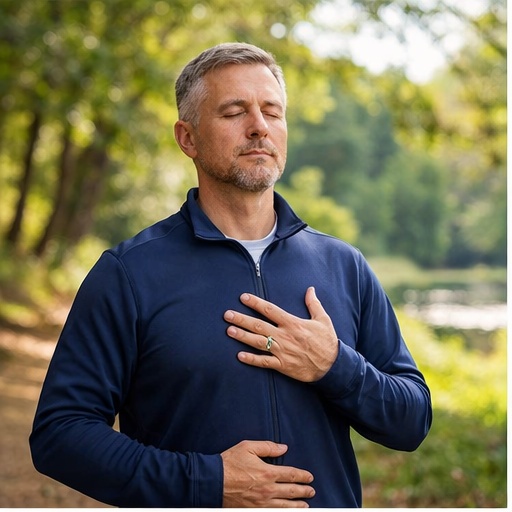
Biohacking Twist: Pair with interoception - tune into bodily sensations to spot stress triggers (e.g., tension from a stalled listing). Over time, this sharpens decision-making under pressure, helping you spot opportunities in any market.
Industry Tie-In: Practice before open houses, rate consultations, or tough calls to maintain composure and turn economic fears into productive conversations.
Ready to feel calmer and more focused today? Try the walking breath on your next break - call me toll-free at 844-522-7100 for personalized tips or to discuss how this fits your routine.
2. Optimize Nutrition to Combat Inflammation and Stabilize Energy
Inflammatory foods worsen stress, while blood sugar crashes fuel brain fog. Biohack with anti-inflammatory fuels that support brain health, dopamine, cortisol balance, joints, and cardiovascular function.
| Nutrient Focus | Why It Helps | Practical Implementation |
|---|---|---|
| Omega-3s (e.g., salmon, walnuts) | Reduces cortisol-induced inflammation; stabilizes mood amid rate volatility. | Aim for 1 - 2g daily via food or supplements; add to lunches for sustained energy during showings. |
| Magnesium (e.g., leafy greens, nuts) | Calms the nervous system; counters sleep disruption from financial worries. | 300 - 400mg supplement if deficient (my preference: Magnesium L-Threonate, as research shows it crosses the blood-brain barrier effectively); take evenings to unwind after market analysis. |
| B Vitamins & Vitamin C (e.g., berries, eggs) | Supports adrenal function; buffers chronic stress from deal uncertainties. | Incorporate into breakfast smoothies for all-day resilience. |
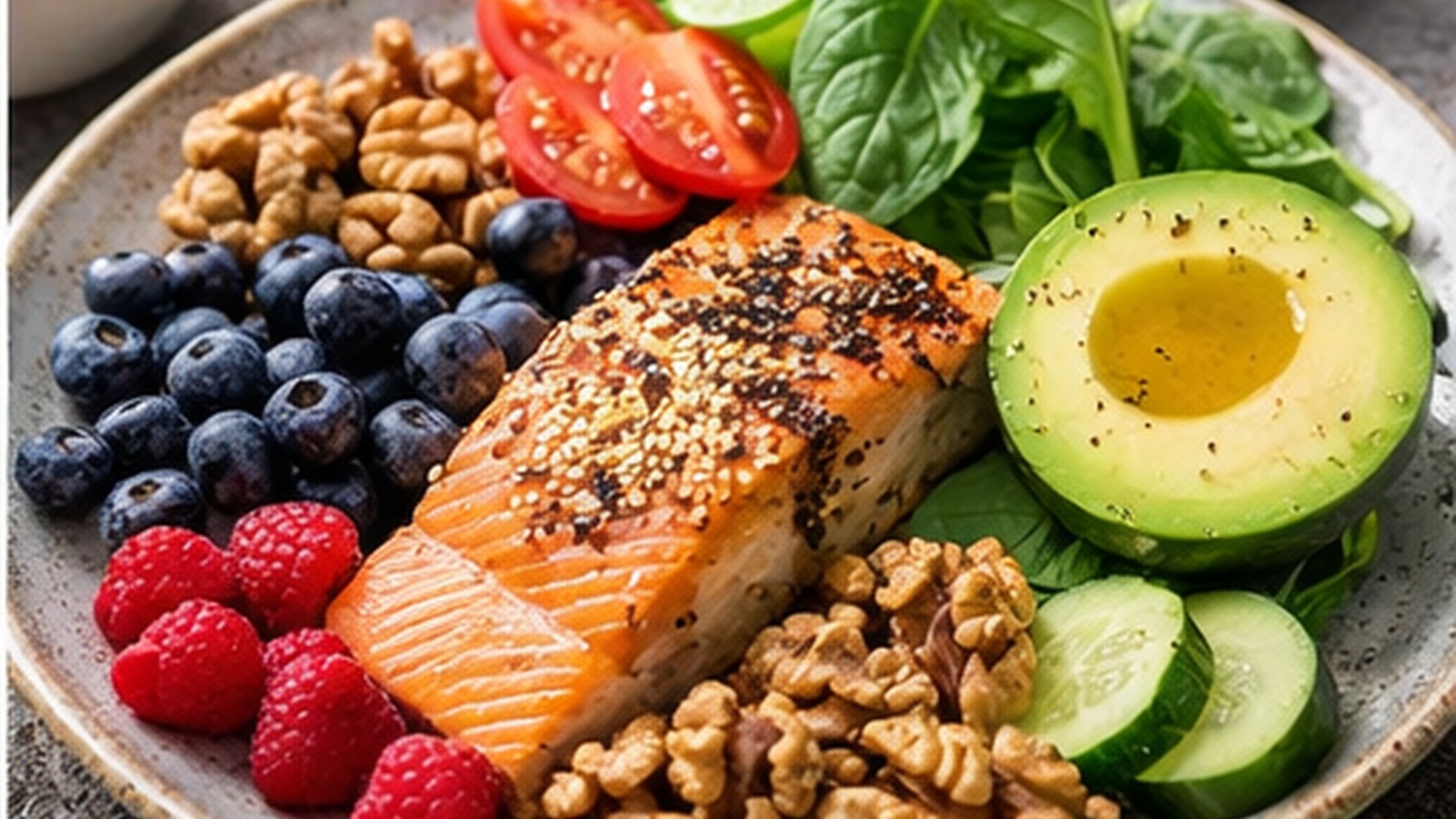
Tip: Sync intake with your cycle if applicable (women often need more during the luteal phase). Ditch processed snacks to avoid blood sugar chaos - they amplify anxiety in high-stakes environments. If you have a sweet tooth, now's the perfect time to tame it.
Want help building a brain-boosting meal plan that fits your busy schedule? Reach out at 844-522-7100 - I'd love to coach you through it.
3. Prioritize Sleep Architecture for Recovery and Clarity
Amen Clinics stresses sleep as foundational for brain health. Under stress, high rates and inflation fears disrupt circadian rhythms, leading to poor judgment in real estate decisions.
Technique: Aim for 7 - 9 consistent hours (e.g., bed by 10 PM, wake by 6 AM). Practice evening "dopamine fasting" - avoid screens and news cycles to reset reward pathways.
Biohacking Twists:
- Morning light exposure: 10 - 15 minutes outdoors to anchor your circadian rhythm and boost daytime alertness.
- Postpone caffeine 90 minutes after waking.
- Dim lights/screens 1 hour before bed; wind down intentionally, especially after stressful days.
Morning Routine:
- Track sleep with a wearable (I use an Oura Ring) to see what helps or hinders recovery - better sleep equals sharper decisions, easier negotiations, and stronger client relationships.
- Gratitude journaling: List three things you're grateful for (e.g., a personal goal met, your health, business wins, resilient clients). If you're not grateful now, will it still be here in 10 years? This rewires neural pathways for positivity.
- Add prayer or intention-setting to align your day.
- Set three key achievements for today.
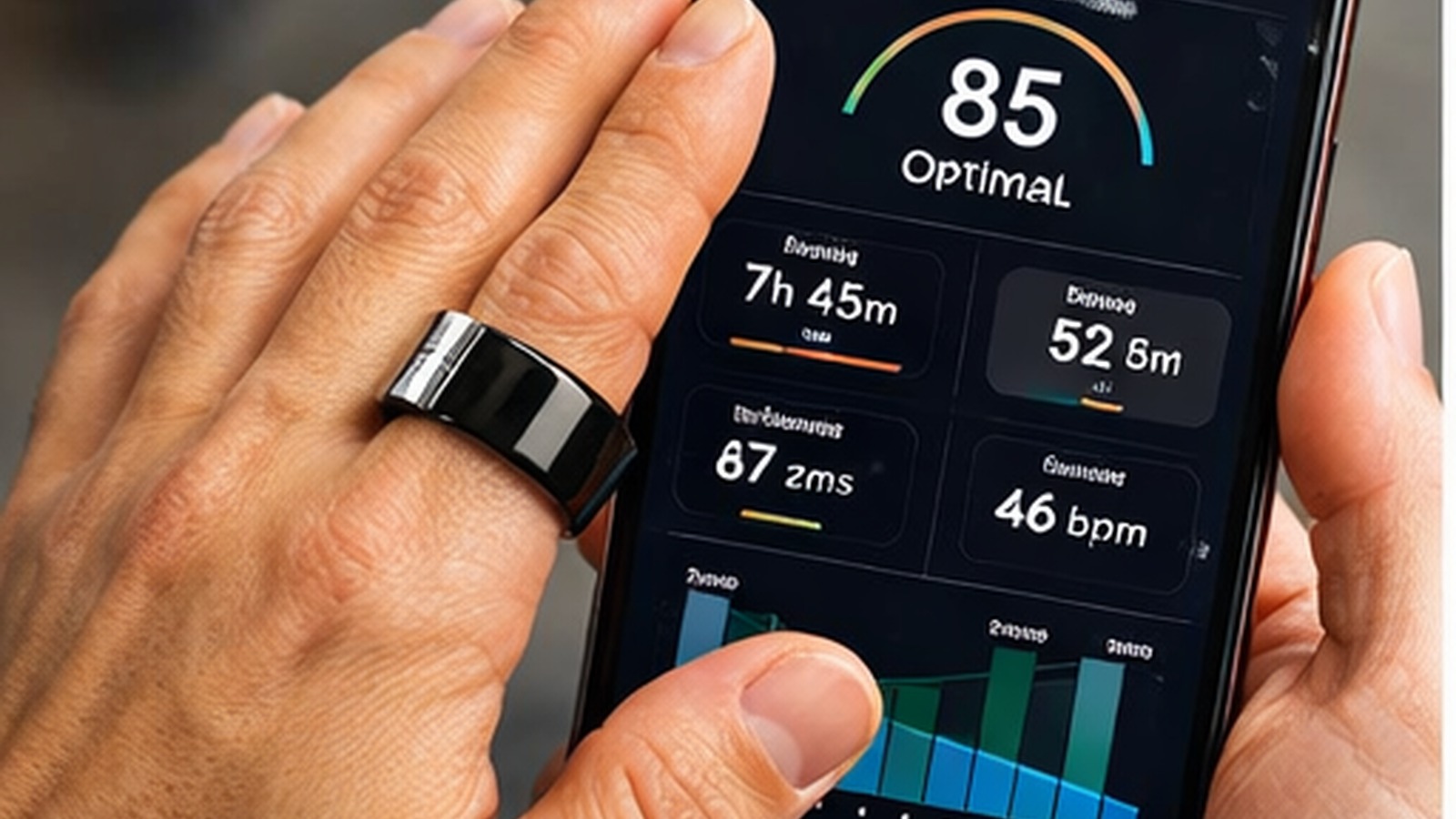
Struggling with sleep in this market? Let's optimize yours - call 844-522-7100 for tailored strategies.
4. Build Physical Resilience Through Movement and Cold Exposure
High rates create downtime filled with rumination - counter it with movement that regulates stress hormones and builds tolerance. Doing challenging things increases resilience.
Technique: 30 minutes daily of strength training, conditioning, or brisk walks to manage cortisol and boost endorphins. End showers with 30 - 60 seconds of cold water for a dopamine surge and inflammation reduction.

Industry Tie-In: Use movement breaks during long drives (impacted by gas prices) to stay grounded and innovative in a tough market.
Need motivation or a simple routine? I'm here - dial 844-522-7100 to get started.
5. Long-Term Financial Biohacks for Economic Armor
Blend your business expertise with biohacking: View finances as a biological safeguard. Chronic debt stress impairs cognition - focus on high-agency moves like living below your means, investing in compounding assets (ETFs, rentals), and preparing for shifts (e.g., AI's impact on jobs). This lowers baseline anxiety, freeing mental energy.
Incorporate these into your routine: Start small, track progress (e.g., via apps or wearables), and adjust based on your body's feedback. As rates stabilize or ease, this resilience positions you to thrive.
If you're coaching clients or leading a team, these tools can transform how real estate pros navigate uncertainty - turning stress into strength.
Ready to level up your brain health, resilience, and business performance? Call me toll-free today at 844-522-7100 - let's chat about how I can support you personally or professionally. Your best days ahead start with a calmer, clearer mind.
References:
Drawn from peer-reviewed studies and reliable sources supporting the key strategies discussed; breathwork for nervous system regulation, magnesium L-threonate, morning light exposure, caffeine timing, cold exposure, gratitude journaling, omega-3s, and exercise for stress resilience.
- **Breathwork and Nervous System Regulation**
Zaccaro, A., et al. (2018). How Breath-Control Can Change Your Life: A Systematic Review on Psycho-Physiological Correlates of Slow Breathing. *Frontiers in Human Neuroscience*. https://pmc.ncbi.nlm.nih.gov/articles/PMC6137615/
(Supports slow breathing’s effects on increasing HRV, parasympathetic activity, and reducing cortisol.)
Fincham, G. W., et al. (2023). Effect of breathwork on stress and mental health: A meta-analysis of randomised-controlled trials. *Scientific Reports*. https://www.nature.com/articles/s41598-022-27247-y
(Meta-analysis showing breathwork reduces stress and improves mental health via autonomic nervous system modulation.)
- **Magnesium L-Threonate for Brain Health**
Zhang, C., et al. (2022). A Magtein®, Magnesium L-Threonate, -Based Formula Improves Brain Cognitive Functions in Healthy Chinese Adults. *Nutrients*. https://pmc.ncbi.nlm.nih.gov/articles/PMC9786204/
(Demonstrates cognitive improvements and brain magnesium elevation via blood-brain barrier crossing.)
Lopresti, A. L., & Smith, S. J. (2025). The effects of magnesium L-threonate (Magtein®) on cognitive performance, sleep quality, and physiological indicators. *Frontiers in Nutrition*. https://www.frontiersin.org/journals/nutrition/articles/10.3389/fnut.2025.1729164/full
(Shows benefits for cognition, reaction time, HRV, and sleep in adults.)
- **Morning Light Exposure and Circadian Rhythm**
Blume, C., et al. (2019). Effects of light on human circadian rhythms, sleep and mood. *Somnologie*. https://pmc.ncbi.nlm.nih.gov/articles/PMC6751071/
(Highlights morning light’s role in aligning circadian rhythms and improving sleep quality.)
Siraji, M. A., et al. (2023). Light exposure behaviors predict mood, memory and sleep quality. *Scientific Reports*. https://www.nature.com/articles/s41598-023-39636-y
(Links increased daytime/outdoor light to better circadian alignment, mood, and sleep.)
- **Caffeine Timing (Delay After Waking)**
Lovallo, W. R., et al. (2005). Caffeine Stimulation of Cortisol Secretion Across the Waking Hours in Relation to Caffeine Intake Levels. *Psychosomatic Medicine*. https://pmc.ncbi.nlm.nih.gov/articles/PMC2257922/
(Evidence of caffeine’s impact on cortisol; supports timing to avoid amplifying morning peaks.)
- **Cold Exposure for Dopamine and Inflammation**
Cain, T., et al. (2025). Effects of cold-water immersion on health and wellbeing: A systematic review and meta-analysis. *PLOS ONE*. https://journals.plos.org/plosone/article?id=10.1371/journal.pone.0317615
(Shows time-dependent reductions in stress and inflammation, with benefits for sleep and quality of life.)
Yankouskaya, A., et al. (2023). Short-Term Head-Out Whole-Body Cold-Water Immersion Facilitates Positive Affect and Increases Interaction between Large-Scale Brain Networks. *Biology*. https://pmc.ncbi.nlm.nih.gov/articles/PMC9953392/
(Links cold exposure to positive mood changes and neural network enhancements.)
- **Gratitude Journaling and Neural Rewiring**
McCraty, R., & Childre, D. (2004). The Grateful Heart: The Psychophysiology of Appreciation. In *The Psychology of Gratitude*.
(Early work on gratitude’s role in rewiring neural pathways for positivity and stress reduction.)
Additional supporting insights: Regular gratitude practice strengthens positive neural pathways via neuroplasticity, as noted in reviews on gratitude’s effects on brain regions like the prefrontal cortex (e.g., PositivePsychology.com synthesis of fMRI studies).
- **Omega-3s for Inflammation, Cortisol, and Mood**
Kiecolt-Glaser, J. K., et al. (2011). Omega-3 Supplementation Lowers Inflammation and Anxiety in Medical Students: A Randomized Controlled Trial. *Brain, Behavior, and Immunity*. https://pmc.ncbi.nlm.nih.gov/articles/PMC3191260/
(Reduces inflammation markers and anxiety symptoms.)
Borsini, A., et al. (2020). The role of omega-3 fatty acids in preventing glucocorticoid-induced reduction in human hippocampal neurogenesis. *Translational Psychiatry*. https://pmc.ncbi.nlm.nih.gov/articles/PMC7341841/
(Protects against cortisol-related effects and supports mood stabilization.)
- **Exercise for Cortisol Regulation, Endorphins, and Resilience**
Childs, E., & de Wit, H. (2014). Regular exercise is associated with emotional resilience to acute stress in healthy adults. *Frontiers in Physiology*. https://pmc.ncbi.nlm.nih.gov/articles/PMC4013452/
(Shows exercise builds resilience to stress and buffers negative emotional responses.)
Mahindru, A., et al. (2023). Role of Physical Activity on Mental Health and Well-Being: A Review. *Cureus*. https://pmc.ncbi.nlm.nih.gov/articles/PMC9902068/
(Links regular activity to HPA axis balance, lower cortisol, endorphin release, and improved mood/stress management.)
These references provide strong scientific backing while remaining accessible. Feel free to hyperlink URLs in your blog for easy reader access. If you’d like expansions, more sources, or adjustments (e.g., APA vs. MLA style), just let me know - **call me toll-free at 844-522-7100** to discuss!