

Home Wealth Blueprint #6: Taxes, Insurance, and Risk Management: Protect What You’ve Built in 2026
“`html
Home Wealth Blueprint #6: Taxes, Insurance, and Risk Management: Protect What You've Built in 2026
This is Blog 6 of 9: Financial Literacy for Confident Homeowners
View the full 9-part series here
Buying a home can be one of the most powerful wealth-building decisions a family makes. But building wealth is only half the job. The next step is protecting what you have built.
Taxes, insurance, escrow accounts, emergency reserves, mortgage insurance, and risk management all work together. When they are understood and planned for, they can help protect your home, your equity, your monthly cash flow, and your long-term financial confidence.
This is where smart homeownership moves beyond simply making a mortgage payment. It becomes a plan.
“`html
If all this sounds great and feels complicated, don't worry. I'm here to help you.
Click below to set up a one-on-one conversation so we can go through your personal homeownership, mortgage, tax, insurance, and risk-management plan together.
“`

Protecting home wealth starts with understanding taxes, insurance, escrow, reserves, and long-term financial risk.
Think About All the Surprises Life Has Already Given You
Most homeowners do not get into financial trouble because they bought a home. They get into trouble because something changed after they bought it.
Property taxes may increase. Homeowners insurance premiums may rise. A roof may need repair. A water heater may fail. A family income may change. A job may be interrupted. A health issue may create unexpected expenses. These are the kinds of events that turn a good homeownership plan into a stressful one if there is no protection strategy in place.
The purpose of this part of the Home Wealth Blueprint is to help you think ahead. With the right mortgage structure, tax awareness, insurance review, and emergency planning, you can reduce surprises and protect the home equity you are working so hard to build.
Read Blog 5: Debt Management |
Read Blog 4: Credit Management |
Read Blog 1: Overview
Why Taxes and Insurance Matter in Your Mortgage Payment
Many homeowners focus on the loan amount and interest rate, but the full monthly housing payment often includes more than principal and interest.
A complete mortgage payment may include:
- Principal: The portion of the payment that reduces the loan balance.
- Interest: The cost of borrowing the money.
- Property taxes: Local taxes assessed by the county or other taxing authority.
- Homeowners insurance: Coverage that helps protect the home and property.
- Mortgage insurance: PMI, MIP, or other coverage required on certain loan types.
- HOA dues: A separate cost for some homes, condos, and planned communities.
When buyers only look at the principal and interest payment, they may underestimate the true cost of owning the home. When homeowners do not review taxes and insurance over time, their payment can increase and catch them off guard.
The better approach is to understand the full payment from the beginning and review it regularly.
Understanding Escrow Accounts
An escrow account, also called an impound account in some areas, is used by your mortgage servicer to collect money each month for certain property-related expenses. Those expenses usually include property taxes and homeowners insurance.
Instead of paying one or two large bills during the year, you pay a portion with your monthly mortgage payment. Then the loan servicer uses the escrow account to pay the tax and insurance bills when they are due.
Escrow can be helpful because it creates a more predictable monthly payment. It can also reduce the risk of missing a large tax or insurance bill. However, escrow accounts can change because property taxes and insurance premiums can change.
Why your escrow payment may change
Your monthly payment can increase even if you have a fixed-rate mortgage. That surprises many homeowners. A fixed-rate mortgage keeps the principal and interest payment stable, but the taxes and insurance portion of the payment may still move up or down.
Common reasons include:
- Property taxes increased.
- Homeowners insurance premiums increased.
- The escrow account had a shortage from the prior year.
- The servicer adjusted the cushion required in the escrow account.
- A supplemental tax bill was issued after purchase or new construction.
This is why reviewing the annual escrow analysis is important. It helps homeowners understand what changed, whether the payment increase is reasonable, and whether there are planning options.
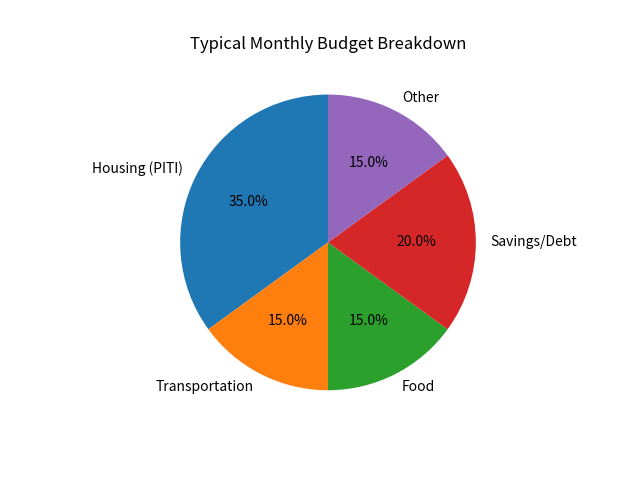
A full housing budget should consider principal, interest, taxes, insurance, savings, debt, transportation, food, and everyday living costs.
Tax Benefits Homeowners Should Review
Homeownership may provide tax benefits, but the value of those benefits depends on your situation. Income, filing status, loan size, state and local taxes, whether you itemize deductions, and current tax law all matter.
Because tax rules can change and every household is different, homeowners should review tax questions with a qualified tax professional. A mortgage professional can help you understand the mortgage side of the conversation, but tax advice should come from your CPA, enrolled agent, or tax advisor.
1. Mortgage interest deduction
Some homeowners may be able to deduct mortgage interest on qualified home acquisition debt if they itemize deductions. The IRS applies limits based on when the mortgage debt was incurred and how the loan proceeds were used.
This becomes especially important when you refinance, use a cash-out refinance, open a HELOC, or consolidate debt. Interest may be treated differently depending on whether the loan proceeds are used to buy, build, or substantially improve the home.
The planning question is not just, "Is the payment lower?" The better question is, "What is the full after-tax and long-term cost of this strategy?"
2. Property tax and SALT deduction
Property taxes may be deductible for homeowners who itemize deductions, subject to state and local tax limits. This is often called the SALT deduction.
For homeowners in high-cost and high-tax areas, this can be a major planning topic. California homeowners, in particular, should pay close attention to this issue because property taxes, state income taxes, and local taxes may all interact with the federal SALT deduction limit.
This does not mean every homeowner receives a tax benefit. Many taxpayers still use the standard deduction. The right answer depends on the numbers.
3. Capital gains exclusion when selling a primary residence
Homeowners who sell a primary residence may qualify to exclude a portion of the gain from taxable income if they meet IRS ownership and use requirements.
This can be one of the most powerful tax advantages of long-term homeownership. It is also why keeping records matters. Improvements, purchase documents, closing statements, refinance documents, and sale records may all be useful when it is time to calculate basis and potential gain.
4. Recordkeeping matters
Good tax planning is easier when your documents are organized. Homeowners should consider keeping:
- Closing disclosures from purchase and refinance transactions.
- Property tax bills.
- Homeowners insurance declarations pages.
- Receipts for major improvements.
- Permits and contractor invoices.
- Mortgage interest statements.
- Escrow analysis statements.
A simple homeownership folder, either digital or paper, can save time, stress, and money later.
Homeowners Insurance: What to Review Each Year
Homeowners insurance is not just a closing requirement. It is part of your long-term risk management plan.
The policy you had when you purchased the home may not be the right policy several years later. Construction costs may rise. Personal property may increase. Your home may have been remodeled. Your deductible may no longer fit your emergency fund. The cost of rebuilding may be higher than you think.
Key insurance items to review
- Dwelling coverage: Is the home insured for a realistic rebuilding cost?
- Deductible: Can you comfortably pay the deductible if a claim occurs?
- Personal property: Are your belongings adequately protected?
- Loss of use: Would the policy help if you had to live somewhere else during repairs?
- Liability coverage: Are you protected if someone is injured on the property?
- Flood or earthquake risk: Are there risks that are not covered by the standard policy?
- Roof, fire, wind, and water damage terms: Do you understand what is covered and what is excluded?
Insurance has become a larger issue in many markets. In some areas, premiums have increased, deductibles have changed, and coverage availability has become more difficult. This makes an annual review more important than ever.
Mortgage Insurance, PMI, and MIP: Review the Cost Over Time
Mortgage insurance is different from homeowners insurance. Homeowners insurance protects the property and the homeowner. Mortgage insurance generally protects the lender if the borrower defaults.
Mortgage insurance may allow a buyer to purchase with a lower down payment. That can be a helpful tool. But it should not be ignored after closing.
Conventional PMI
Conventional private mortgage insurance, often called PMI, may be removable once enough equity has been reached and the loan meets the required guidelines.
Home values can change. Loan balances go down over time. If you purchased with less than 20 percent down, it may be worth reviewing your PMI status periodically.
FHA MIP
FHA mortgage insurance premium, often called MIP, follows different rules than conventional PMI. Depending on the original loan terms, MIP may last for a set period or for the life of the loan.
If an FHA borrower has built enough equity and improved their credit or overall financial position, it may make sense to compare the current FHA loan with a conventional refinance. The goal is not simply to remove MIP. The goal is to compare the total cost, payment, rate, loan term, closing costs, and long-term benefit.
When to review mortgage insurance
It may be time to review PMI or MIP when:
- You believe your home value has increased.
- You have paid the loan balance down.
- Your credit score has improved.
- Your income or debt picture has changed.
- You are considering refinancing.
- You want to compare your current loan with other options.
Risk Management for Homeowners
Risk management is not about expecting something bad to happen. It is about being prepared enough that a problem does not become a financial crisis.
A home is often the largest asset a family owns. Protecting it should involve more than one insurance policy.
1. Emergency reserves
Homeowners should have money set aside for repairs, deductibles, maintenance, and unexpected expenses.
A renter can call the landlord when something breaks. A homeowner is the landlord. Roofs, plumbing, appliances, heating and cooling systems, fences, water heaters, and electrical repairs all become part of the ownership responsibility.
A healthy reserve account can protect your credit, reduce stress, and help you avoid using high-interest debt when repairs are needed.
2. Life insurance and disability protection
If other people depend on your income, life insurance and disability protection should be part of the homeownership conversation.
The mortgage is usually one of the largest monthly obligations a family has. If income stops because of death, illness, or disability, the question becomes whether the family can still keep the home.
This is a conversation to have with a qualified insurance professional. The goal is to make sure your homeownership plan still works if life changes.
3. Umbrella liability coverage
Umbrella insurance may provide additional liability protection above the limits of your homeowners and auto policies.
As your assets grow, protecting against liability risk becomes more important. This can be especially relevant for homeowners with pools, rental properties, teenage drivers, pets, business exposure, or higher net worth.
4. Title insurance and ownership protection
Title insurance helps protect against certain ownership issues that may not be discovered before closing.
Most purchase transactions include a lender's title insurance policy, and many buyers also receive or purchase an owner's title insurance policy depending on local custom and transaction structure.
Your escrow officer, title company, real estate professional, or attorney can help explain how title insurance works in your state.
5. Estate planning and document organization
Protecting a home also means making sure the right people can act if something happens.
Homeowners may need to review wills, trusts, powers of attorney, beneficiary designations, property vesting, and other planning documents with an estate planning attorney.
This is especially important for married couples, blended families, aging parents, business owners, and homeowners who own property in more than one state.
Why Emergency Reserves Matter After You Buy
One of the biggest mistakes buyers can make is using every dollar to buy the home and leaving no safety margin.
A strong purchase plan should consider:
- Down payment.
- Closing costs.
- Moving expenses.
- Furniture and appliances.
- Initial repairs or improvements.
- Emergency reserves after closing.
- Future property tax and insurance increases.
This is one reason we often compare multiple loan strategies. Sometimes the best mortgage is not the one that uses the most cash at closing. The best mortgage may be the one that helps you buy the home and still sleep well afterward.
A Practical Annual Homeowner Review
Once a year, homeowners should pause and review the major parts of their homeownership plan.
Annual Home Wealth Protection Checklist
- Review your mortgage statement and current loan balance.
- Review your escrow analysis for tax and insurance changes.
- Compare your homeowners insurance coverage to current rebuilding costs.
- Check whether PMI or MIP should be reviewed.
- Confirm your emergency reserve target.
- Review major home maintenance needs for the next 12 to 24 months.
- Organize tax, insurance, mortgage, and improvement documents.
- Review life, disability, and umbrella insurance needs with the right professionals.
- Ask whether refinancing, a second mortgage, or staying with your current loan makes the most sense.
This kind of review does not have to be complicated. The value comes from catching issues early, before they become expensive.
How First Capital Mortgage Helps You Plan Beyond the Loan
At First Capital Mortgage Inc., we do more than quote a mortgage payment. We help clients think through the full homeownership picture.
That can include:
- Reviewing the full payment, including taxes, insurance, and mortgage insurance.
- Comparing loan structures before purchase or refinance.
- Helping clients understand escrow changes.
- Reviewing whether PMI or MIP should be evaluated.
- Comparing the net cost of refinancing versus keeping the current mortgage.
- Helping homeowners think about cash flow, reserves, and long-term flexibility.
- Coordinating the mortgage conversation with tax, insurance, real estate, and estate planning professionals when needed.
The goal is simple: help you protect the home, protect your equity, and make confident financial decisions.
Frequently Asked Questions About Mortgage Taxes, Insurance, and Risk Management
What are mortgage taxes and insurance?
Mortgage taxes and insurance usually refer to property taxes and homeowners insurance that may be included in your monthly mortgage payment. If you have an escrow account, your servicer collects part of these costs each month and pays the bills when they are due.
What is an escrow account?
An escrow account is an account managed by the mortgage servicer to help pay property taxes and homeowners insurance. Instead of paying large bills once or twice a year, homeowners often pay a portion each month with their mortgage payment.
Can my mortgage payment increase if I have a fixed-rate loan?
Yes. A fixed-rate mortgage keeps the principal and interest payment stable, but the taxes and insurance portion can still change. If property taxes or insurance premiums increase, the monthly payment may also increase.
Are mortgage interest and property taxes still deductible?
Some homeowners may be able to deduct mortgage interest and certain state and local taxes if they itemize deductions. The benefit depends on current tax rules, filing status, income, loan amount, and whether itemizing is better than taking the standard deduction. Homeowners should review this with a qualified tax professional.
Can PMI or FHA MIP be removed?
Conventional PMI may be removable when enough equity has been reached and lender requirements are met. FHA MIP works differently and may require a refinance to remove, depending on the original loan terms. The right answer depends on your loan type, equity position, credit profile, and long-term plan.
Why should homeowners review insurance every year?
Home values, construction costs, deductibles, personal belongings, and liability risks can change. An annual insurance review helps homeowners confirm that the policy still fits the home and the family's current needs.
How much should homeowners keep in emergency reserves?
A common goal is to keep several months of essential expenses available, but the right amount depends on income stability, family obligations, property age, insurance deductibles, and overall financial comfort.
When should I review my mortgage, taxes, and insurance?
A good time to review these items is once per year, when property taxes change, when insurance premiums increase, when home equity grows, when income changes, or when a refinance could improve the overall financial picture.
Ready to Protect What You've Built?
Whether you are buying your first home, reviewing your current mortgage, thinking about refinancing, or trying to understand rising taxes and insurance, the right plan can make a meaningful difference.
We can help you review your mortgage payment, escrow account, loan structure, mortgage insurance, and long-term options so you can make a more confident decision.
Schedule a Conversation
Let's review your goals, your mortgage, and the best next step.
Was This Helpful?
If any of your friends, family, or co-workers are looking to buy, sell, or refinance, can I count on you to introduce us via text or email?
Coming Up Next in the Series
In Blog 7, we will look at how homeownership can support retirement planning and long-term wealth building.
- View the full Home Wealth Blueprint series
- Read Blog 5: Debt Management
- Read Blog 4: Credit Management
Additional Resources
- IRS Publication 936: Home Mortgage Interest Deduction
- IRS Publication 523: Selling Your Home
- IRS Topic 503: Deductible Taxes
- CFPB: What Is an Escrow or Impound Account?
- CFPB: When Can I Remove PMI?
First Capital Mortgage Inc.
Helping families buy, refinance, and protect the homes they work so hard to own.
steve@firstcapitalmortgageinc.com |
(844) 522-7100
“`